


A Guide to Luxury Rug Materials
- The Rug Story

- Jun 27
- 6 min read
A rug can read beautifully on a board and still disappoint on site if the fibre has been chosen for appearance alone. Any proper guide to luxury rug materials has to start there. For interior designers and trade specifiers, material choice is not a finishing detail - it shapes handle, sheen, durability, maintenance, acoustic performance and how confidently a rug will sit within the wider scheme.
In high-end residential and commercial interiors, the question is rarely which fibre is best in absolute terms. It is which fibre is right for the room, the traffic, the brief and the client’s expectations. A silk-rich construction may give extraordinary light play in a principal bedroom, while a pure wool hand tufted rug often makes more sense in a drawing room, hotel suite or heavily used family space. Luxury sits in the appropriateness of the specification as much as in the material itself.
A guide to luxury rug materials for specification
When reviewing fibres, it helps to look beyond surface appearance. Designers usually begin with colour and pattern, but the more decisive questions are tactile and practical. Does the room need softness underfoot or stronger recovery from furniture placement? Is lustre central to the design story, or would a more matte finish support the scheme better? Will the rug be viewed in changing daylight, under decorative lighting, or in a commercial setting where performance has to work harder?
Construction also matters. Cut pile gives a fuller, velvety surface and tends to show colour depth beautifully. Loop pile brings more texture and often a cleaner, more architectural finish. Cut and loop pile allows for contrast, movement and subtle pattern definition without relying entirely on colour. The same fibre can behave quite differently across these constructions, which is why material and pile should always be specified together rather than in isolation.
Wool - the enduring standard
Wool remains the benchmark for luxury rug making for good reason. It has body, resilience and a naturally rich appearance that suits both restrained and expressive interiors. In hand tufted rugs, wool takes dye exceptionally well, producing nuanced colour that feels grounded rather than artificial. It also offers a reassuring hand - soft enough for refined residential settings, yet durable enough for many contract and hospitality applications.
For designers, wool is often the most versatile starting point. It performs well in living rooms, bedrooms, studies, boutiques and reception areas where elegance and practicality need to coexist. It also has natural insulating and acoustic benefits, which can be valuable in schemes where comfort and sound absorption are part of the brief.
That said, not all wool specifications are equal. The quality of the yarn, the density of the tufting and the finish all influence the final result. A finer wool can create a more elevated handle and visual clarity, while denser construction will improve presence and wear. Wool is forgiving, but it should not be treated as generic.
Silk - refined lustre and elevated detail
Silk brings a distinctly different character. Where wool tends to provide depth and warmth, silk introduces light, definition and a more fluid surface. It catches the eye differently throughout the day, shifting with the angle of light and the direction of the pile. In the right setting, that variation is what gives a rug its quiet drama.
Silk is particularly effective when a designer wants to sharpen pattern contrast or add a layer of visual sophistication to a tonal scheme. Used selectively, it can outline motifs, highlight carved details or create a polished finish within cut and loop constructions. In principal bedrooms, dressing rooms, formal sitting rooms and low-traffic statement areas, it can be exactly the right choice.
The trade-off is straightforward. Silk is less forgiving than wool in busy spaces and generally asks for a more considered maintenance approach. It is a luxury material in the truest sense - exquisite when specified well, less suitable when asked to perform beyond its natural strengths.
Guide to luxury rug materials: bamboo silk and viscose
Clients are often drawn to fibres with a silk-like sheen, and this is where bamboo silk and viscose enter the conversation. Both can deliver a beautiful reflective quality and a contemporary, elegant finish, especially in pared-back interiors where texture has to do more of the work.
Bamboo silk is frequently chosen for its softness and luminous surface. It can bring a sophisticated glamour to bespoke rugs, particularly in muted palettes where the play of light becomes part of the design language. In hand tufted pieces, it works well as a feature fibre or in combination with wool, giving designers the opportunity to balance sheen with structure.
Viscose offers a similar visual appeal, though performance expectations must be realistic. It can create a very polished look, but it is typically better suited to lower-traffic rooms and clients who understand that appearance-led fibres require more care. Water sensitivity, pile shading and marking are all part of the conversation. None of this makes the material unsuitable - it simply means it should be specified with clarity.
For many projects, a wool and bamboo silk blend gives the most resolved answer. Wool contributes resilience and body, while bamboo silk introduces movement and lustre. The result can feel layered and luxurious without tipping too far towards fragility.
Blends - often the smartest luxury choice
Pure fibres have their place, but blended specifications are often where design and performance meet most successfully. A blend allows a rug to retain softness and sophistication while being tailored more precisely to the setting. This is especially useful for interior designers managing competing priorities such as visual impact, lead times, client budgets and wear expectations.
A wool-silk blend can soften the matte character of wool and add refined highlights. A wool-bamboo silk blend can achieve a more contemporary shimmer without sacrificing too much practicality. These combinations are particularly effective in bespoke work, where the fibre choice is part of a larger specification process rather than an off-the-shelf decision.
Blends also give more control over aesthetic balance. Some schemes call for understated texture rather than overt sheen. Others need the rug to hold its own against polished stone, lacquered joinery or layered upholstery. The right blend can moderate or amplify those relationships with much greater subtlety than colour alone.
How to choose the right luxury rug material
The room should lead the specification. In a formal reception room or a principal suite, a more delicate fibre story may be entirely appropriate. In a family living space, private members' area or hotel bedroom, wool or a wool-led blend will usually offer greater confidence over time. If dining chairs are likely to move across the surface each day, that needs to be factored in. If a rug is intended as an artful focal point in a lightly used room, the brief shifts.
Lighting is another deciding factor. Lustrous fibres can look extraordinary under soft natural light and decorative evening lighting, but in harsher or more variable settings they may reveal tracking, shading or directional changes more readily. Some clients appreciate that movement. Others read it as inconsistency. Managing that expectation early is part of good specification.
Texture and pile height deserve equal attention. A deeper cut pile in wool can feel sumptuous and inviting, while a lower, denser loop pile may suit cleaner-lined commercial or contemporary interiors. Cut and loop constructions are particularly useful when a designer wants tonal pattern, sculptural interest or a subtle nod to an artistic reference without introducing additional colours.
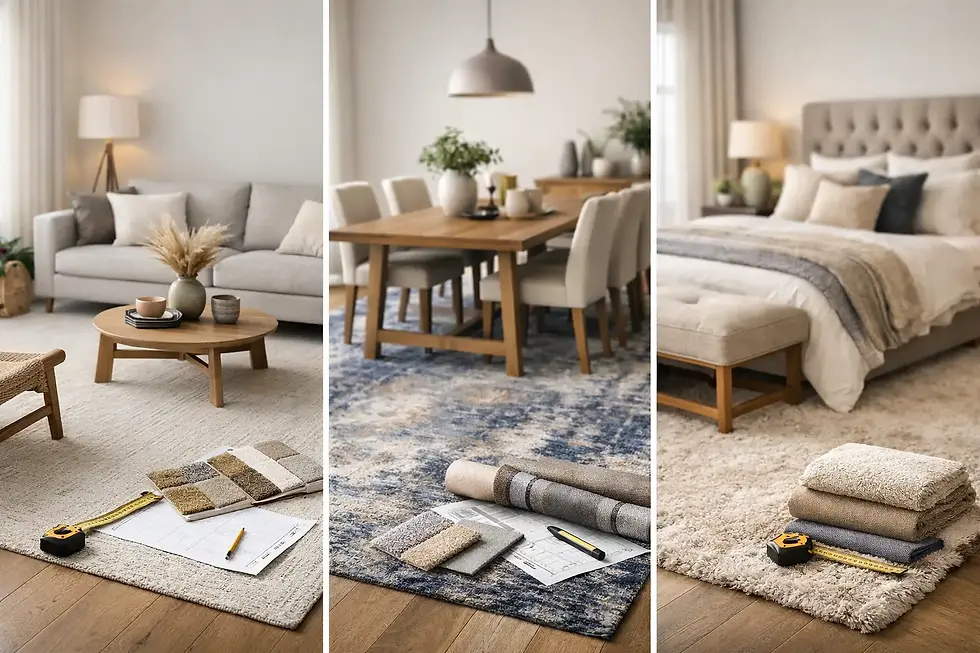
This is where a bespoke service becomes especially valuable. Sampling fibres, reviewing colour poms and considering CAD visuals can resolve material decisions long before installation. What looks ideal on paper may need refinement once scale, light and use are properly tested against the scheme.
Practical expectations designers should share with clients
Luxury fibres reward informed ownership. Natural variation, pile direction, light reflection and gentle shading are often signs of quality rather than defects. A silk or bamboo silk surface will not behave like a hard flooring finish, nor should it. The beauty is in the depth and movement.
At the same time, designers should be candid about maintenance and use. Delicate fibres are best placed where they can be appreciated without being overworked. Wool-led rugs are typically easier to specify where everyday life is part of the picture. If a client wants high sheen in a hardworking room, a blended construction may be the most elegant compromise.
For trade projects, credibility comes from specifying with both artistry and discipline. The most successful rugs do not simply match the palette - they support the life of the room.
Material choice is where that support begins. When fibre, construction and setting are aligned, a rug does more than complete a scheme. It gives it weight, texture and a sense of finish that feels entirely considered. If the brief asks for something tailored rather than standard, that is often the moment a bespoke approach proves its value most clearly.

Comments