


Are Hand Tufted Rugs Durable?

A hand tufted rug can look beautifully composed on a scheme board, then become the first item a client questions once the conversation turns to longevity. Are hand tufted rugs durable enough for real projects, real footfall and real client expectations? The honest answer is yes - often very much so - but only when durability is understood in context rather than treated as a blanket promise.
For interior designers and trade specifiers, that context matters. A rug is never chosen in isolation. It sits within a broader brief shaped by traffic levels, end use, fibre performance, underlay, maintenance expectations and, just as importantly, the desired finish of the room. Hand tufting occupies a particularly valuable space because it offers design freedom, luxurious texture and tailored specification while still delivering dependable performance when used appropriately.
Are hand tufted rugs durable in everyday use?
In most residential settings, a well-made hand tufted rug is durable enough to perform very successfully for years. It can stand up to regular foot traffic in sitting rooms, bedrooms, studies and many hospitality-style residential interiors, particularly when the right yarn and pile construction have been specified from the outset.
That said, hand tufted rugs do not all perform equally. Durability is influenced by several factors at once: fibre choice, pile height, pile density, construction quality, backing, finishing and the environment in which the rug will sit. A densely tufted wool rug in a formal drawing room behaves very differently from a viscose-heavy rug placed in a busy family kitchen-diner.
This is where specification becomes far more important than the broad category itself. Asking whether hand tufted rugs are durable is a little like asking whether upholstery fabric lasts well. The answer depends on what it is made from, how it is constructed and where it is being used.
What makes a hand tufted rug last well?
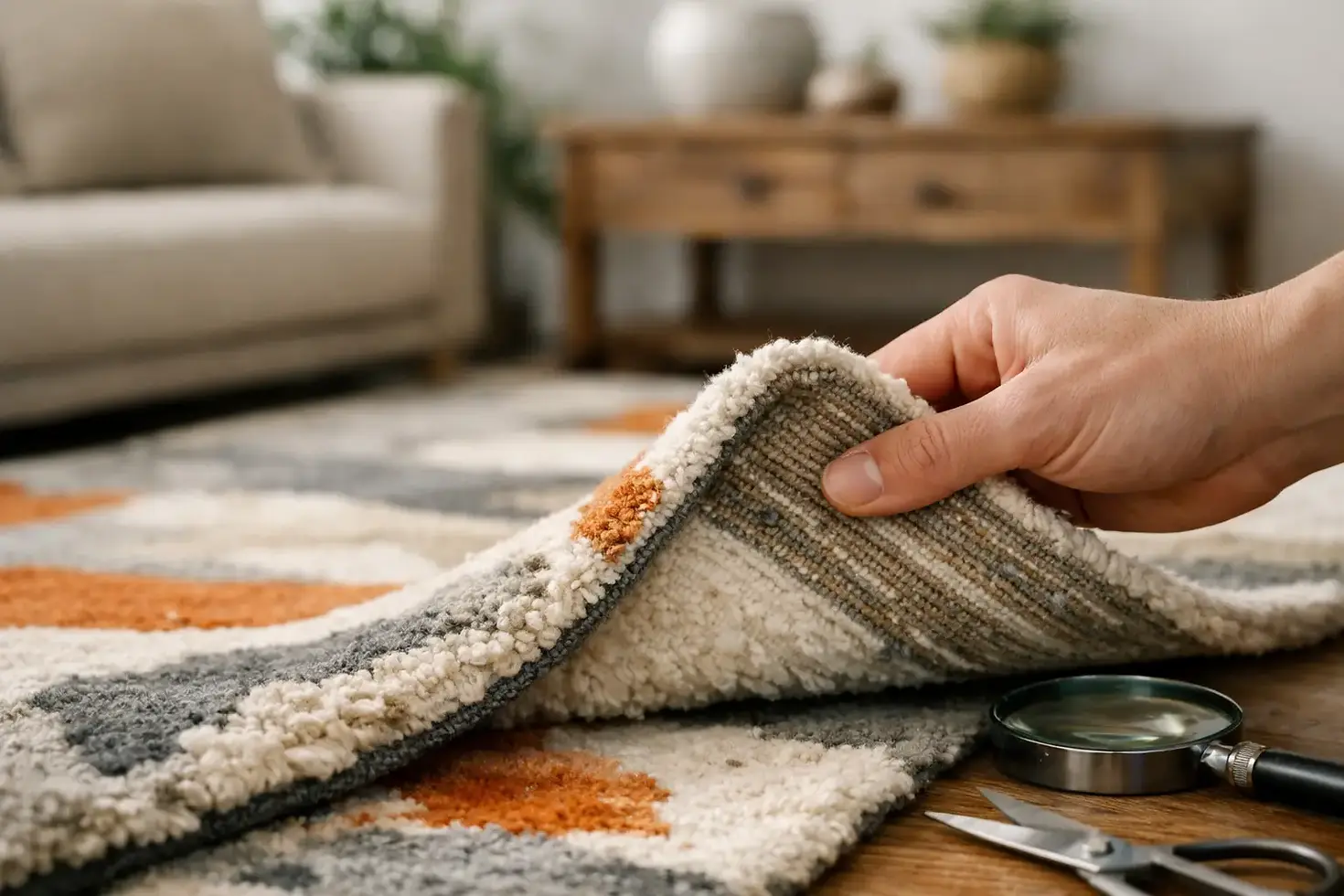
A hand tufted rug is created by punching yarn through a backing fabric with a tufting tool, then securing the pile with latex and attaching a secondary backing. That construction allows for remarkable design versatility. It also means the quality of the making process has a direct effect on how the rug ages.
Pile density is one of the clearest indicators of long-term performance. A rug with a fuller, tighter tufted construction generally wears better than one with a sparse pile, because the yarn has greater structural support and the surface recovers more attractively from use. Dense construction also tends to give a more confident handle underfoot, which matters in luxury interiors where tactility is part of the brief.
Fibre selection is equally important. Wool remains one of the most dependable choices for hand tufted rugs because it is naturally resilient, has good memory, and handles everyday wear far better than many fashion-led fibres. It also offers a richness of texture and colour that suits high-end schemes. Tencel, viscose and other lustrous fibres can create extraordinary surface movement and elegance, but they are usually better used with care, either in lower-traffic settings or in balanced fibre blends where aesthetics and performance are both considered.
The finishing details matter too. Shearing quality, carving precision, edging and backing integrity all contribute to whether a rug continues to look polished over time. In a trade setting, this is why supplier expertise counts. Durability is not simply made in the workshop; it is shaped during the specification stage.
Where hand tufted rugs perform best
Hand tufted rugs are particularly well suited to design-led residential projects, boutique hospitality spaces, private flats, reception rooms, principal bedrooms and lounges where appearance, comfort and customisation all carry weight. In these environments, they often strike the right balance between luxury and practicality.
They are especially compelling when a project calls for bespoke scale, unusual colouration, artistic pattern work or refined textural shifts. A pile of discovery, a cut above, a loop around - hand tufting allows these design gestures to become highly specific rather than off-the-shelf. That creative flexibility is one reason the construction remains so popular with designers.
In moderate-traffic commercial interiors, they can also perform well if the specification is disciplined. A low to medium pile, durable wool-rich fibre mix and clear maintenance plan can make a considerable difference. However, for very heavy circulation zones such as busy corridors, entrance areas or high-turnover public spaces, other rug constructions may be more appropriate.
Where durability can become an issue
The phrase durable should never be mistaken for indestructible. Hand tufted rugs are not usually the first recommendation for the most punishing environments, especially where wheeled traffic, ingrained dirt, moisture exposure or relentless daily wear are expected.
Longer or softer piles can crush in high-use zones. Silk-effect fibres can show shading, tracking and pressure marks more readily. Latex-backed constructions may also have a different lifespan profile from hand knotted rugs, particularly if the rug is exposed to poor environmental conditions or inconsistent care over many years.
This is not a weakness so much as a matter of fit for purpose. In premium interiors, the best results come from matching the rug to the brief rather than expecting one construction to answer every demand. A luxurious hand tufted piece in a principal suite may be exactly right. The same piece in a building lobby may not be.
Fibre choice and the durability question
When clients ask whether hand tufted rugs are durable, what they often mean is: will it still look good after daily life happens to it? Fibre is central to that answer.
Wool is typically the safest specification for longevity. It has natural spring, masks everyday soiling better than many smoother fibres, and generally ages with more grace. It is also a strong fit for projects that need warmth, depth and a more grounded luxury.
Viscose and similar fibres bring luminous sheen and an elegant painterly finish, but they can be more sensitive to crushing, water marking and abrasion. They are often chosen because they create an elevated visual effect, not because they are the most forgiving option. In the right room, they are exquisite. In the wrong room, they can disappoint.
Blended constructions often offer the best middle ground. A wool and silk-effect blend, for example, can soften the visual weight of a design while retaining better resilience than a fully decorative fibre story. For designers, this is often where the most successful specifications are found - not in extremes, but in balance.
Durability is also about maintenance
Even the best-made rug will underperform if it is badly maintained. Regular vacuuming without an aggressive beater bar, prompt attention to spills, periodic professional cleaning and the correct underlay all have a meaningful effect on lifespan.
Underlay is frequently underestimated in rug performance. It reduces movement, softens impact, supports the pile and helps the rug wear more evenly. In practical terms, it can make a hand tufted rug feel more substantial and remain more stable within the space.
Client education matters as well. A designer may specify a beautiful custom rug perfectly suited to the room, but if the end user expects it to behave like a hardwearing contract floor finish, there is likely to be a mismatch. The most successful projects are those in which aesthetic ambition and practical expectation are aligned from the beginning.
The trade view - specify for performance, not assumption
For trade professionals, the better question is not simply are hand tufted rugs durable, but durable enough for what, and specified how? That shift in thinking leads to better outcomes.
A bespoke hand tufted rug can be tailored in fibre, pile, scale and finish to answer a project with far more accuracy than a stock piece. It can be made calmer, denser, softer, richer, more architectural or more forgiving depending on the brief. That level of control is precisely what makes hand tufting so relevant to professional specification.
At The Rug Story, this is where the conversation becomes most valuable - not at the point of broad reassurance, but at the point of informed selection. Designers do not need vague claims about quality. They need a rug that supports the scheme, satisfies the client and performs as intended in the room it was designed for.
A hand tufted rug, well specified, is often a very durable choice. Not for every setting, and not in every fibre, but certainly for many of the spaces where luxury interiors ask for softness, artistry and technical flexibility in equal measure.
The useful question is never whether a rug can last. It is whether it has been chosen with enough care to do so beautifully.


Comments