


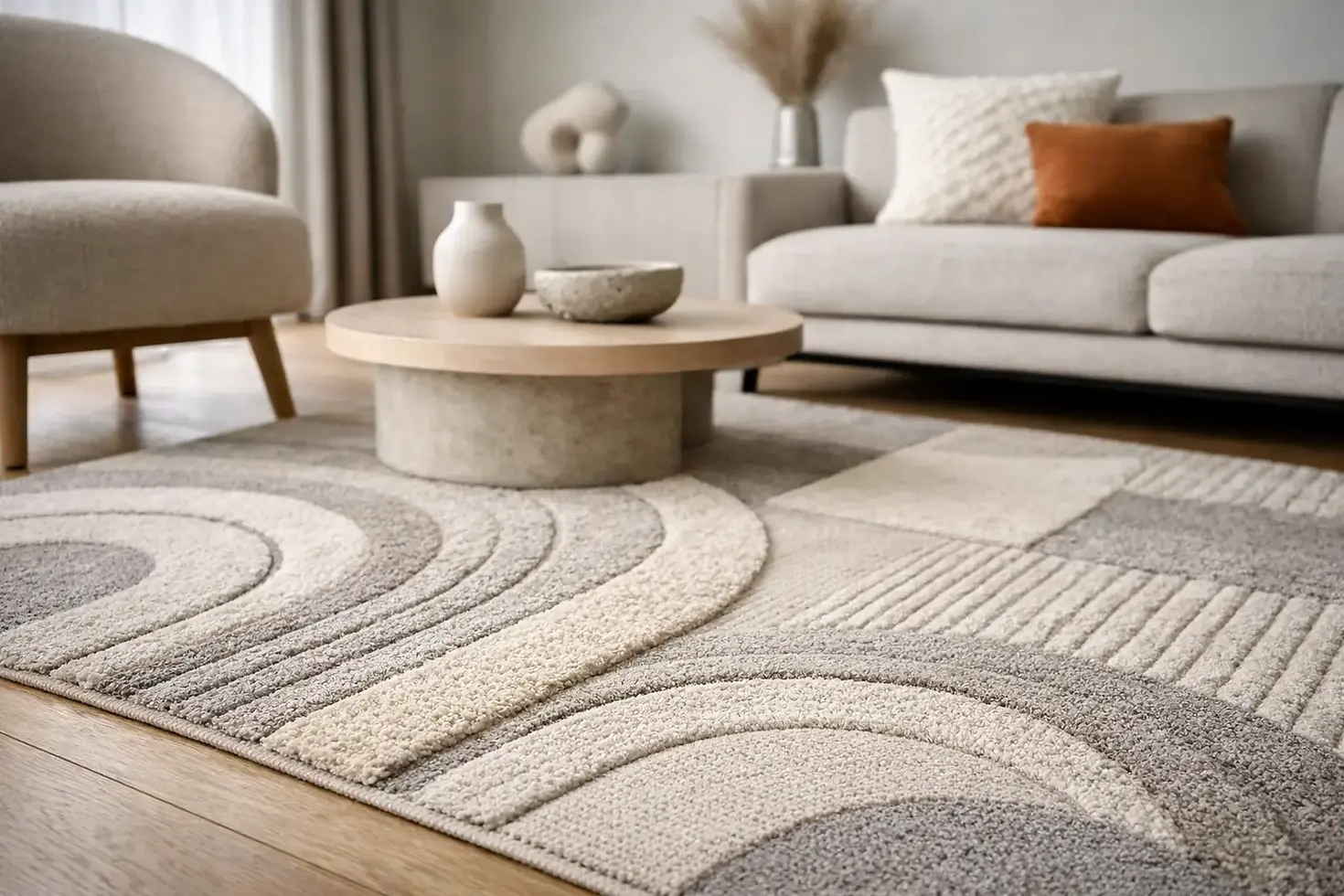
Cut and Loop Rugs for Design-Led Interiors

Texture often does more for a scheme than colour alone. In well-resolved interiors, the floor is rarely a passive surface, which is why cut and loop rugs continue to hold such appeal for designers who want pattern, depth and tactility without visual excess.
For trade projects, that appeal goes beyond aesthetics. A rug has to read beautifully in presentation, sit comfortably within the wider material palette, and perform in the context it is specified for. Cut and loop construction offers a particularly sophisticated route because it allows designers to work with relief, contrast and movement in a way that feels considered rather than decorative for its own sake.
What are cut and loop rugs?
Cut and loop rugs combine two tufting techniques within the same design. Some yarn is sheared to create a cut pile, which gives a softer, more velvety finish. Other yarn is left uncut to form loop pile, which introduces structure and a more tailored texture.
That combination creates variation in height and surface. Sometimes the effect is subtle, with a quiet tonal pattern only becoming visible when light moves across the pile. In other cases, it is more graphic, using carved geometry or layered motifs to make the rug a focal point within the room.
For interior designers, this is where the format becomes especially useful. Rather than relying solely on printed or high-contrast pattern, cut and loop pile allows detail to emerge through texture. It can feel architectural, calm and luxurious all at once.
Why cut and loop rugs work so well in luxury schemes
A strong interior rarely depends on one statement piece. More often, it succeeds because every element has been edited carefully and each material contributes something distinct. Cut and loop rugs support that approach because they add interest while still feeling grounded.
In a restrained residential scheme, they can introduce a soft layer of movement beneath upholstered furniture, timber and stone. In hospitality or boutique commercial settings, they help zones feel more composed and intentional. A reception area, private lounge or dressing room can benefit from a rug that brings tactile richness without overwhelming the architecture.
There is also a practical visual advantage. Loop pile catches the eye differently from cut pile, so the rug changes character throughout the day as natural and artificial light shift. That gives the surface life. In neutral interiors especially, this can prevent the floor from appearing flat.
The design value lies in the contrast
The real strength of cut and loop rugs is contrast handled with restraint. The contrast may come from pile height, sheen, density or pattern definition. Even with a single colour, the interplay between the two constructions can create a layered finish that feels bespoke and highly resolved.
This is often more elegant than introducing multiple colours purely to achieve impact. In projects where the palette is already doing a great deal - perhaps with figured marbles, decorative joinery or expressive fabrics - a tonal cut and loop rug can bring balance. It contributes depth, but it does not compete.
Equally, when a scheme calls for stronger pattern language, cut and loop construction gives that pattern more dimension. Linear motifs become sharper. Organic forms gain softness and shadow. The result feels crafted rather than merely applied.
Where cut and loop rugs perform best
Not every rug construction suits every room, and that is where specification matters. Cut and loop rugs are particularly effective in spaces where visual texture is as important as underfoot comfort.
Living rooms, bedrooms, private studies and dressing areas are natural settings because they allow the pile detail to be appreciated up close. In these spaces, designers can be more expressive with relief and softness, especially where the rug anchors key furniture pieces.
They also work beautifully in lower-traffic commercial interiors, such as meeting spaces, executive offices, private client rooms and boutique hospitality suites. The construction brings a polished, tailored character that aligns well with premium environments.
That said, suitability depends on fibre choice, pile density and intended use. In very heavy traffic areas, certain constructions may need a more disciplined specification. A highly sculpted design can be stunning, but it may not be the right answer for every setting. As ever, beauty and performance need to be considered together.
Fibre choice changes the character of the rug
Construction is only part of the story. The selected fibre will shape how a cut and loop rug looks, feels and wears over time.
Wool remains a preferred choice for many design-led projects because it offers resilience, softness and a rich, natural finish. It takes texture particularly well, making it ideal for tonal cut and loop designs where the aim is understated depth. The surface feels warm and substantial, which suits both classic and contemporary interiors.
Viscose or other lustrous fibres can be introduced where sheen is part of the brief. In cut sections, that lustre can create a beautiful play of light, while loop elements retain structure. The effect is more glamorous, though often better suited to spaces where wear is lighter and maintenance expectations are clearly understood.
Blends can also be useful, particularly when the scheme calls for a balance between softness, visual movement and practicality. The right fibre mix allows the designer to tune the finish with precision rather than compromise between extremes.
How to specify cut and loop rugs well
A successful specification begins with the room, not the rug in isolation. Scale, furniture layout, circulation routes and lighting conditions all influence how the design will read once installed.
Start with the role the rug needs to play. If it is there to quietly support a layered material palette, a low-contrast tonal design may be enough. If it needs to define a seating arrangement or add a more pronounced decorative note, the contrast between cut and loop areas can be pushed further.
Next, consider proportion carefully. Fine linear patterns can elongate a room, while larger repeat motifs create a calmer, more generous visual rhythm. In open-plan spaces, the rug often performs an architectural function, so the pattern should sit comfortably with the room's geometry rather than fight it.
Pile height matters too. More pronounced relief adds drama, but it should align with the practical demands of the project. A softer, deeper cut pile may feel luxurious in a principal bedroom, while a neater profile may be more appropriate in a commercial scheme where chairs are moved regularly.
This is also where bespoke development becomes particularly valuable. Adjusting scale, colour, fibre and construction details allows the rug to work with the project rather than forcing the project to adapt to a standard product.
Cut and loop rugs in bespoke design
Bespoke cut and loop rugs offer a level of control that many trade projects require. A concept may begin with a simple one-colour design and evolve through pile variation alone, or it may develop into a more expressive composition tailored to the scheme's architecture and furnishings.
For designers presenting to clients, this flexibility is not simply creative - it is commercially useful. Being able to refine the exact tone, dimensions and texture of a rug makes it easier to support the wider scheme with confidence. It also helps avoid the familiar issue of finding a nearly right option that still needs explaining away.
In practice, bespoke service should support specification at every stage. CAD drawings, colour poms and fitting guidance all help translate an idea into a finished piece that performs on site as intended. For trade professionals, that support is often as important as the design itself.
At The Rug Story, cut and loop pile construction sits naturally within this more tailored way of working, where craftsmanship and project practicality are treated with equal seriousness.
Common misconceptions about cut and loop pile
One misconception is that textured rugs are harder to integrate into calm interiors. In reality, they are often easier to place than overtly patterned alternatives because the interest comes from surface and shadow rather than busy contrast.
Another is that more texture always means better design. It does not. Some of the most effective cut and loop rugs are the most restrained, using a very quiet change in pile to create elegance that reveals itself gradually.
There is also a tendency to treat all cut and loop rugs as interchangeable. They are not. The quality of tufting, the density of construction, the clarity of the pattern and the material selection all affect the final result. In luxury interiors, those differences are immediately visible.
A more considered way to add pattern
For designers balancing comfort, detail and sophistication, cut and loop rugs offer a compelling middle ground. They bring pattern without noise, texture without heaviness and a sense of craft that suits both contemporary and classic interiors.
When specified thoughtfully, they do more than finish a room. They sharpen the whole scheme, giving the floor a quieter kind of confidence - and often that is exactly what a polished interior needs.


Comments