


Custom Rugs Versus Broadloom for Interiors

A rug is often the final layer in a scheme, yet its specification can alter the entire reading of a room. It can sharpen a furniture plan, soften a severe architectural envelope, define circulation or bring a carefully composed palette together. For designers weighing custom rugs versus broadloom, the question is not simply which looks more luxurious. It is which construction best serves the layout, performance requirements and intended atmosphere of the project.
Broadloom has an established place in hospitality, commercial and large residential settings. A bespoke hand-tufted rug, however, brings a different level of compositional control. Knowing where each is strongest makes specification more assured and helps avoid costly compromises later in the programme.
Custom Rugs Versus Broadloom: The Fundamental Difference
Broadloom is carpet produced in continuous rolls, then cut and fitted across a floor area. It is typically selected for wall-to-wall coverage, whether in bedrooms, corridors, guest suites or expansive open-plan spaces. Its visual effect is immersive: the floor becomes a continuous field of colour, texture or pattern.
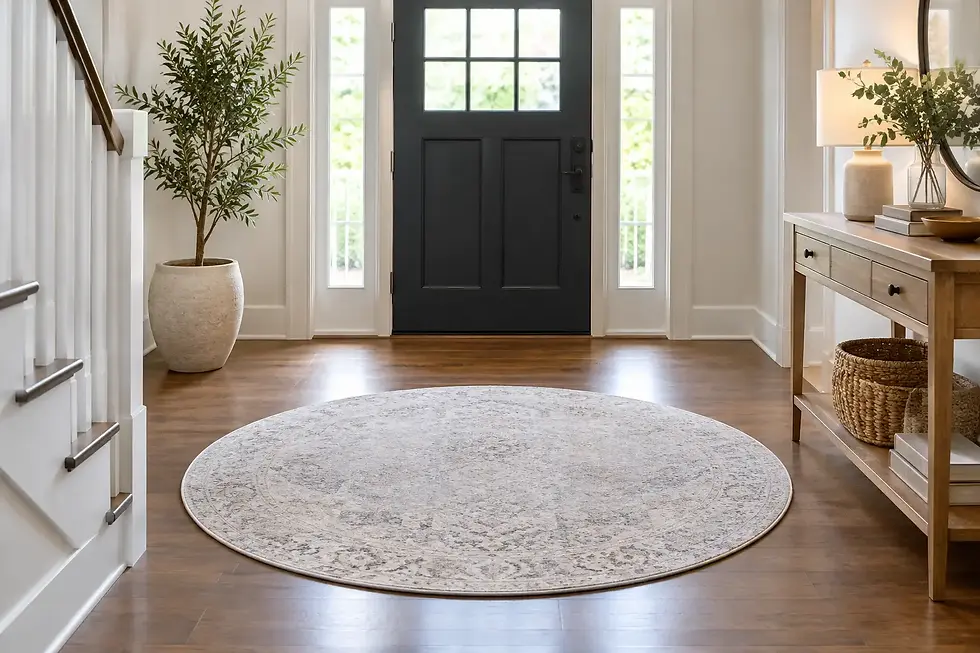
A custom rug is a defined piece, designed to a particular size and shape, usually with a finished edge. It may sit beneath a dining table, anchor a seating arrangement or create a deliberate moment within a larger room. In a hand-tufted specification, the design can be developed through cut pile, loop pile or a combination of both, allowing texture to become part of the composition rather than an afterthought.
The distinction matters because a rug can be designed around the room and the furniture, whereas broadloom usually asks the room to accept the repeat, width and fitting logic of the carpet. Neither approach is automatically superior. The right choice depends on what the floor needs to do.
When a Bespoke Rug Is the Stronger Design Decision
A bespoke rug is particularly effective where the furniture arrangement is central to the scheme. In a drawing room, for example, its dimensions can be set to ensure front legs sit comfortably on the rug, with enough visible flooring around the perimeter to retain proportion. In a dining room, the rug can extend beyond chairs when they are pulled back, rather than stopping awkwardly at the table edge.
This precision is equally valuable in irregular rooms. Bay windows, curved walls, fireplaces, angled joinery and freestanding islands can make standard sizes feel approximate. A custom shape follows the architecture with purpose, whether that means a soft oval beneath a sculptural table or a long, narrow runner calibrated to a particular corridor.
Colour control is another compelling reason to specify bespoke. Rather than selecting the nearest available ground colour, designers can develop a palette around paint, stone, timber, upholstery or artwork. A restrained one-colour rug can carry immense depth through fibre and pile variation; a cut-and-loop design can introduce graphic relief without adding another competing colour. The result is quieter, more resolved and often more durable visually than a pattern chosen only because it was available.
For client presentations, a bespoke rug also conveys intention. It demonstrates that the room has been considered from floor level upwards, not assembled from convenient components. That is particularly valuable in private residences, boutique hospitality and schemes where individuality is part of the brief.
Pile Construction Changes More Than Appearance
Hand-tufted rugs offer several ways to build texture into a design. Cut pile has a velvety, light-responsive surface and can lend a sense of softness to formal living spaces and bedrooms. Loop pile has a more structured character, with a tactile, architectural quality that can suit contemporary interiors and areas needing a more grounded finish.
Cut and loop pile combines the two, using changes in height and surface to create subtle pattern, line or movement. It is well suited to designs inspired by brushstrokes, botanical forms or geometric motifs, where the relief should reward closer inspection rather than dominate the room.
Construction should be considered alongside fibre choice, expected traffic and cleaning arrangements. A beautifully tactile surface may be ideal for a low-traffic private suite, while a flatter, more contained construction may be preferable for a frequently used circulation space. Luxury is not only a matter of softness. It is the confidence that a material is right for its setting.
Where Broadloom Earns Its Place
Broadloom is often the practical choice when continuity is the design objective. In a hotel bedroom, a large principal suite or a whole-floor residential scheme, wall-to-wall carpet can make the space feel quieter and more cocooning. It offers acoustic comfort underfoot and removes the visual interruption of exposed floor around a rug.
It can also be efficient in rooms with complicated furniture layouts. If a space contains multiple seating zones, occasional tables and movable pieces, a single fitted surface may be easier to live with than several rugs requiring exact placement. In bedrooms, broadloom can be especially appealing because comfort begins at the bedside rather than at the edge of a rug.
From a programme perspective, broadloom can be advantageous where a suitable product is already available and the area is extensive. Fitting needs to be assessed early, however. Roll widths, seams, pattern direction, underlay, transitions and access all affect the finished result. A broadloom design with a large repeat can look excellent in a sample but demand careful room planning to prevent seams or partial motifs from becoming conspicuous.
Broadloom is not necessarily less design-led. It simply delivers its design language differently: through continuity, scale and atmosphere rather than the framed focal point of a rug.
The Specification Questions That Prevent Compromise
Before selecting either route, establish how the space will be used. Is the floor covering defining a social zone, providing warmth across an entire room, reducing sound, protecting a surface or supporting a brand narrative? One answer can lead to a rug; several may point towards broadloom or a considered combination of both.
Scale should be tested before colour. A rug that is too small can make even beautifully selected furniture appear disconnected. Conversely, wall-to-wall carpet in a compact room may be the most restful answer, particularly where the aim is to reduce visual fragmentation. CAD drawings and room plans are useful at this stage, allowing designers to assess borders, furniture clearances, pile direction and transitions before a specification is finalised.
Fibre selection requires the same discipline. Consider the desired hand feel, resilience, appearance retention, stain exposure and maintenance plan. Natural fibres can offer exceptional character and tactility, while alternative fibre options may better answer certain practical demands. The best specification is rarely based on a single attribute. It balances the client's expectations with the realities of use.
Budget should also be viewed as a question of value rather than only initial cost. Broadloom may cover a large area economically, but fitting, wastage and future replacement should be factored in. A custom rug can be a more concentrated investment, directing craftsmanship and colour exactly where it has the greatest visual impact. In some schemes, a bespoke rug over a hard floor achieves a more layered result while preserving flexibility for future changes.
A Hybrid Approach Can Be the Most Refined Answer
The choice need not be absolute. A fitted neutral broadloom in bedrooms or upper-floor circulation can establish softness and acoustic comfort, while bespoke rugs create distinction in principal reception rooms, private lounges and key guest spaces. This allows the floor plan to feel connected without making every room identical.
A coordinated palette is essential when combining the two. The rug does not need to match the broadloom precisely. In fact, a slight contrast in texture or tone can give the scheme depth. What matters is that the relationship feels intentional, with shared undertones and a clear hierarchy between background and feature.
For trade projects requiring tailored development, The Rug Story can support this process through colour poms, CAD visualisation, sizing guidance and bespoke hand-tufted construction. These tools help designers move from an initial concept to a specification that is both persuasive in presentation and practical on site.
Installation, Care and the Long View
A custom rug benefits from an appropriate underlay, particularly on smooth hard flooring. It improves comfort, helps the rug sit correctly and reduces movement. Edges, thresholds and door clearances should be checked before manufacture, especially with deeper pile constructions or unusually shaped pieces.
Broadloom requires a different level of site coordination. Subfloor condition, moisture, fitting method and seam placement can have a marked effect on appearance and longevity. In commercial or high-use settings, the maintenance plan should be agreed before installation, not once the carpet has already begun receiving traffic.
Both choices deserve a considered care regime. Regular vacuuming appropriate to the pile, prompt attention to spills and professional cleaning where required will protect appearance. Designers should also set clear expectations with clients: handcrafted texture and natural materials have character, and character should not be mistaken for uniformity.
The most successful floor covering is the one that makes the room feel inevitable. Whether that is a bespoke rug with a painterly cut-and-loop surface or broadloom that draws the whole interior into one calm field, the decision should begin with the space, then allow craftsmanship to do the rest.


Comments