


Hand Tufted Rugs for Hotels That Work Hard
- The Rug Story

- Jun 19
- 6 min read
A hotel rug is rarely just a finishing touch. In a guest room, it softens acoustics and frames the bed. In a lounge, it helps define the pace of the space. In a suite, it often carries more visual weight than any other textile. That is why hand tufted rugs for hotels remain such a considered choice for designers who need visual distinction, comfort underfoot and specification flexibility in equal measure.
For hospitality projects, the appeal is not simply that hand tufted rugs look luxurious. It is that they allow a designer to shape colour, pile, pattern and proportion with far more freedom than many off-the-shelf alternatives. When a scheme needs to feel tailored rather than repeated, that matters.
Why hand tufted rugs for hotels suit hospitality schemes
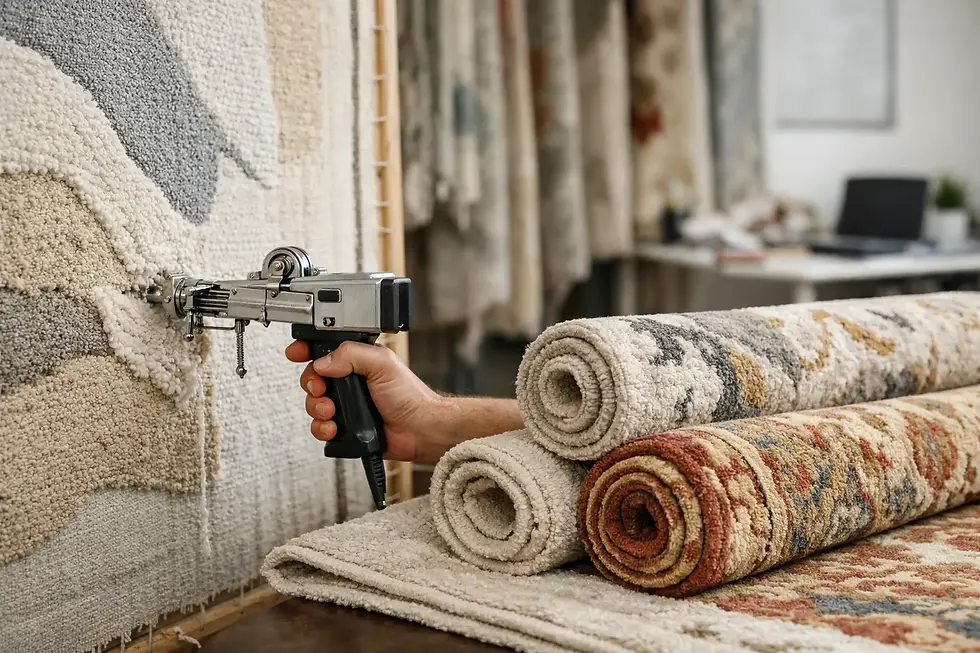
Hotels ask a great deal of a rug. It must support the concept, withstand frequent use, photograph well, feel inviting and sit comfortably within budget parameters. Hand tufting occupies a very persuasive middle ground. It delivers a refined, handcrafted finish while allowing a more agile route to bespoke design than fully hand knotted construction.
That balance is especially useful in hospitality, where timelines are often tight and brand identity is closely managed. A hand tufted rug can be developed to suit a precise footprint, a defined palette and a particular pile effect, whether the scheme calls for a quiet plain, a painterly abstract or a structured cut and loop design with architectural rhythm.
There is also a tactile quality that hotels continue to value. In bedrooms and suites, a generous cut pile brings warmth and softness where guests feel it immediately. In reception lounges or private dining areas, loop pile or cut and loop construction can introduce textural depth and clearer pattern definition. The effect is curated rather than generic.
The specification question starts with the space
Not every hotel area should be treated in the same way. A rug for a boutique suite has a different brief from one placed in a library bar or executive lounge. Good specification begins with how the room is used, not just how it should look on installation day.
Guest rooms and suites
In private accommodation, comfort is usually the first priority. Guests notice what sits beside the bed and beneath bare feet. Here, hand tufted rugs can work beautifully in wool-rich qualities with a cut pile that feels dense and composed. The design may be understated, but the finish should never feel ordinary.
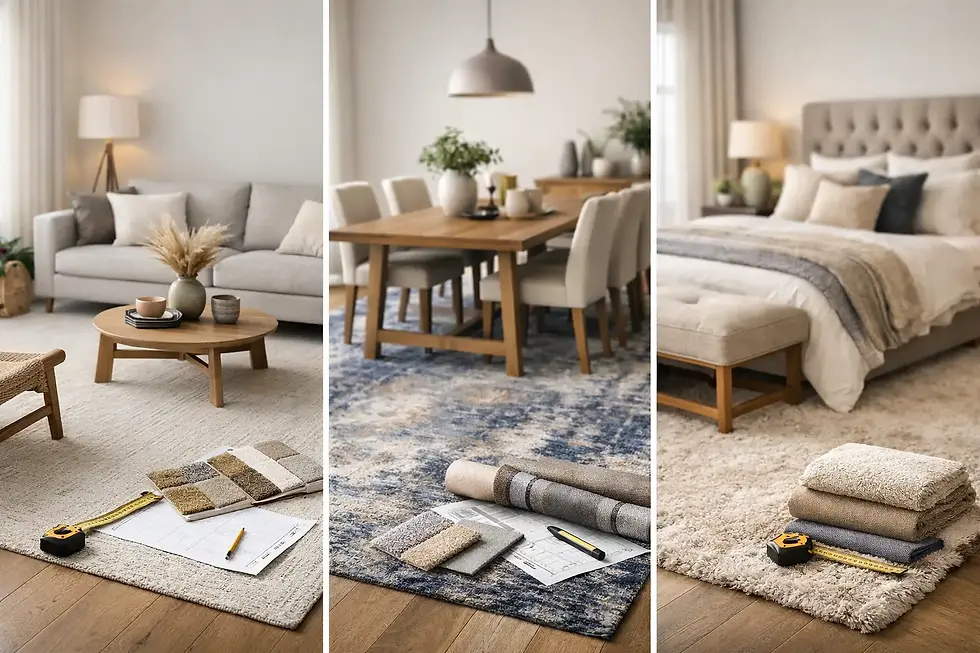
This is often where bespoke sizing becomes crucial. Standard sizes can leave awkward margins around joinery, beds or seating zones. A rug made to the room creates better proportion and a more resolved layout. That visual calm is part of luxury.
Lounges, bars and reception areas
Public areas call for more caution. These spaces carry heavier traffic, rolling luggage and a higher chance of spills. A hand tufted rug can still be the right choice, but fibre selection, pile height and pattern all need sharper attention. Lower, more controlled piles tend to perform better, and tonal variation can be useful in disguising the first signs of wear between maintenance cycles.
There is also a design advantage here. In large hospitality spaces, rugs help break down scale and organise seating into legible zones. A custom piece can echo interior architecture, pull together upholstery and lighting, and guide the eye without feeling overly decorative.
Corridors and high-throughput zones
This is where trade-offs matter. Hand tufted rugs are not automatically the answer for every circulation area. In some hotel schemes, wall-to-wall hospitality carpet or a more technical flooring specification may be the better commercial choice. Where a rug is being considered in a transitional space, the practicalities of movement, edging, slip resistance and cleaning regime need honest review.
Luxury is not served by specifying the wrong construction for the wrong zone.
Material choices shape both feel and performance
One of the strongest arguments for hand tufting in hospitality is control over materiality. Fibre is not a decorative footnote. It influences appearance, resilience, maintenance and guest experience.
Wool remains a dependable choice for many hotel interiors because it offers natural warmth, pleasing texture and a depth of colour that suits sophisticated schemes. It can be particularly effective in guestrooms, suites and quieter lounge settings where tactile quality carries weight.
Other fibres may be introduced where a different finish or performance profile is required. The right answer depends on the brief. A boutique hotel seeking softness and artistic expression may prioritise richness of pile and nuanced colour. A larger commercial operator may need a more measured balance between luxury and upkeep. Neither approach is wrong, but they do lead to different specifications.
Pile construction matters just as much. Cut pile gives a fuller, more velvety appearance. Loop pile can feel more structured and often reads as slightly more architectural. Cut and loop pile allows pattern to emerge through relief rather than relying purely on colour contrast. For hotel projects, that can be particularly elegant - subtle enough for long-term relevance, distinctive enough to support brand character.
Design flexibility is where hand tufting earns its place
A successful hotel scheme rarely depends on a single statement. More often, it is built through layers of restraint, proportion and carefully managed detail. Hand tufted rugs support that process because they can be adjusted with precision.
Colour matching is often one of the first practical concerns. A rug may need to sit against bespoke upholstery, timber finishes, drapery or wallcoverings without introducing visual noise. Custom colour development allows the piece to belong to the scheme rather than compete with it.
Pattern scale is another common issue. A design that works on a showroom sample can fall apart when enlarged for a suite or elongated for a lounge. Bespoke development allows scale to be recalibrated so motifs read correctly within the room. This is where CAD support and considered sampling become genuinely useful, not merely presentational.
Designers also benefit from being able to specify exact dimensions and shapes. Rectangles are only the beginning. Curved seating plans, asymmetrical furniture layouts and unusually proportioned suites often call for a more tailored footprint. The rug should support the room plan, not force compromise around it.
What trade professionals should ask before specifying
A beautiful rug can still become a difficult product if the early conversations are not thorough enough. For hotel projects, the specification process should be commercially realistic from the outset.
Lead time is one of the first questions to settle. Hospitality programmes can shift quickly, especially during fit-out. A supplier who can move efficiently from concept to CAD, sampling and production offers real value to the design team.
Installation conditions also deserve attention. Access routes, final site measurements, underlay requirements and fitting guidance all affect the finished result. A rug that arrives perfectly made but poorly integrated on site has still failed part of the brief.
It is also wise to discuss maintenance expectations early. Housekeeping teams need clear, practical advice. The more ambitious the pile finish or lighter the ground colour, the more important that conversation becomes. Some schemes justify the extra care. Others are better served by a tighter, more forgiving specification.
This is where a specialist trade partner stands apart from a general retailer. The process should include design support, clear technical discussion and the sort of presentation tools that help interior designers move confidently through client approval.
The case for bespoke over off-the-shelf
Off-the-shelf rugs can work for certain hospitality settings, particularly where speed outweighs individuality. But for hotels with a clear identity, bespoke usually delivers stronger value over the life of the scheme.
A custom hand tufted rug aligns with the room rather than approximating it. It can reinforce branding without becoming literal, support wayfinding through tone and texture, and help standard rooms feel more elevated without redesigning every fixed element. In premium settings, those details shape the guest impression.
There is also a reputational aspect. Designers specifying for hospitality are judged on cohesion, not just creativity. A rug that looks considered, fits perfectly and performs as expected reflects well on the entire project team.
For many trade clients, this is the real attraction of a specialist supplier such as The Rug Story. Bespoke capability, curated design direction, colour poms, CAD drawings and fitting guidance are not add-ons. They are part of how a rug becomes easier to specify well.
Choosing hand tufted rugs for hotels with confidence
The best hotel rugs do not shout for attention, even when they are visually striking. They settle the room. They absorb noise, add depth, support furniture placement and give guests a sense that every element has been chosen with care.
Hand tufted rugs for hotels offer that rare combination of artistry and practical flexibility. They are not the right answer for every zone, and the specification does depend on traffic, maintenance and budget. But where the brief calls for bespoke luxury with commercial awareness, they remain one of the most persuasive tools in the designer's palette.
If the room deserves more than a standard size and a safe neutral, it is usually worth asking for a rug that was designed to belong there from the start.

Comments